

The Complete Guide to Insulating Lean-To Roofs & Masonry Walls to UK Building Regulations (2025 Edition)
By Melrose Designs – Architectural Designers Specialising in Home Extensions Across Wigan & the North West
To meet the latest UK Building Regulations (2025), lean-to roofs and masonry walls typically need to achieve U-values between 0.13–0.18 W/m²K, depending on the roof type and insulation method. This can be achieved using rigid PIR boards, insulated plasterboard, warm roof upgrades, or cavity/solid wall insulation systems.
Introduction: Why Insulation Matters More Than Ever
Energy-efficient upgrades are now central to both Planning and Building Control requirements. Whether you’re converting a lean-to, extending a terraced home, or retrofitting a garage conversion into a new dwelling, insulation is one of the most heavily inspected areas by UK Building Control.
At Melrose Designs, we work on hundreds of home extensions each year across Wigan, St Helens, Warrington and Greater Manchester, giving us first-hand insight into what actually passes inspection—and what gets flagged.
This guide explains every compliant insulation method, what it costs, and when you should use it.
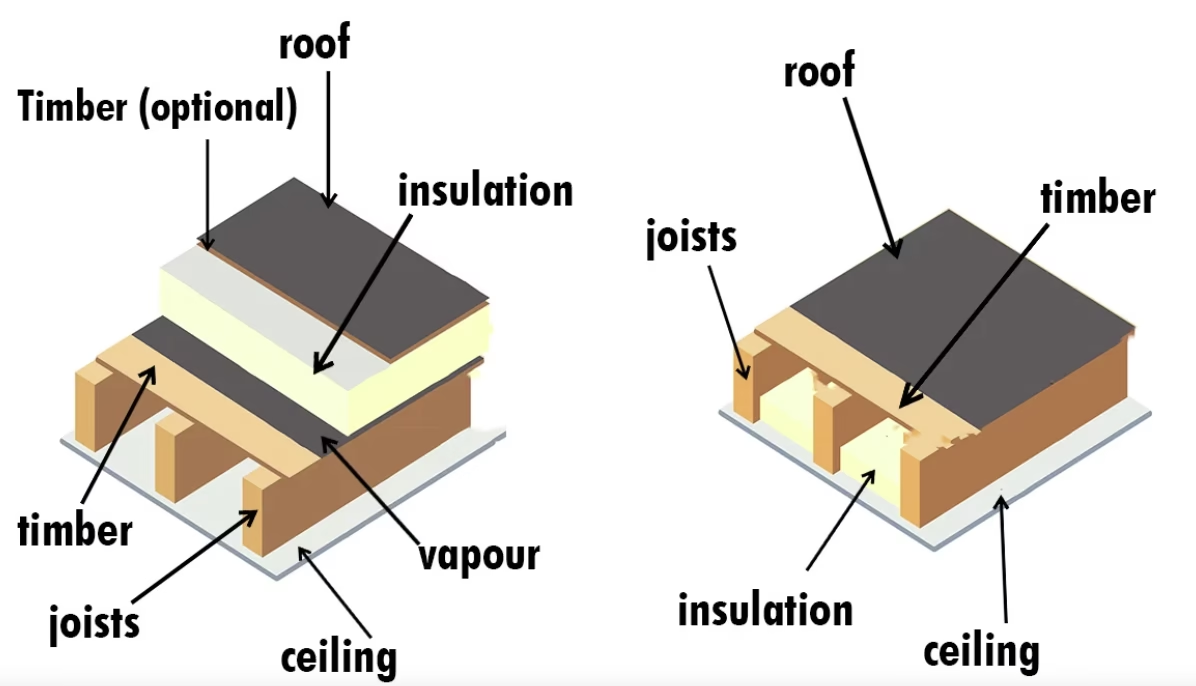
Section 1 — Insulating a Lean-To Roof (Cold & Warm Roof Methods)
Lean-to roofs are common in kitchen extensions, garage conversions and utility rooms. Insulating them correctly is essential to meet the current U-value target of approx. 0.15–0.18 W/m²K.
Option 1 — Warm Roof Insulation (Best for New Extensions)
How it works: Insulation sits above the rafters.
Build-up:
- Lean-to rafters
- Structural deck
- 120–150mm PIR insulation
- OSB board
- Single-ply membrane / GRP / felt
- Required 1:40 fall
Why Building Control likes it:
- Eliminates cold bridging
- Gives the best energy performance
- Great for extensions where headroom is limited
👉 More info in our sub-topic: Warm Roof vs Cold Roof – Which Should You Choose?
Option 2 — Cold Roof Insulation (Best for Refurbishments)
How it works: Insulation sits between the rafters.
Typical build-up:
- 100–150mm PIR between rafters
- 25–50mm PIR below rafters with a VCL
- Plasterboard finish
Ventilation:
Minimum 50mm continuous ventilation gap from eaves to ridge.
Pros:
- Cheaper to install
- Ideal for garage conversions
Cons:
- Easy to get wrong
- Risk of condensation if ventilation is poor
- Option 3 — Hybrid Roof (When Depth is Limited)
- Used for older lean-tos with shallow rafters.
Build-up:
- Mineral wool between rafters
- PIR insulated plasterboard beneath
- VCL taped and sealed
When to choose this:
If the existing structure cannot take the depth of PIR.
Section 2 — Insulating Brick & Masonry Walls (Cavity & Solid Wall Methods)
Masonry walls must achieve a max U-value of 0.18 W/m²K for new builds and conversions.
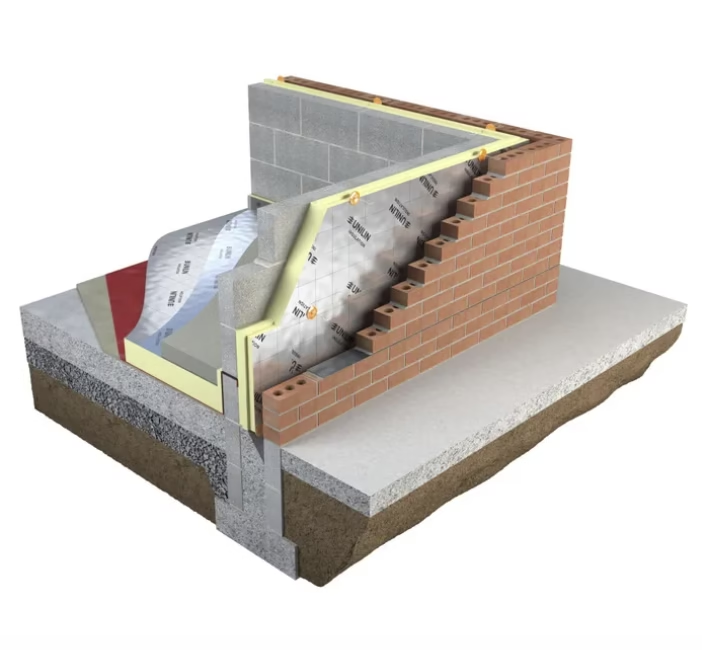
Option 1 — Cavity Wall Insulation (If cavity exists)
Suitable for: 1930s–1980s homes with 50mm–100mm cavity.
Materials:
- EPS beads
- Mineral fibre
- PU foam (less common now)
Why it works:
Fills the cavity fully and reduces heat loss dramatically.
Cost:
£18–£30 per m²
Option 2 — Internal Wall Insulation (IWI) – Insulated Plasterboard
The most common method for garage conversions and lean-to refurbishments.
Build-up:
- 62.5–82.5mm insulated plasterboard (PIR backed)
- Joints taped
- VCL sealed
Benefits:
- Helps meet U-values easily
- Cheapest solution
- Quick installation
Option 3 — Timber Stud & PIR System
Used when walls are uneven or damp.
Build-up:
- 25–50mm batten
- 75–100mm PIR
- VCL
- Plasterboard
Pros:
Excellent thermal performance.
Cons:
Reduces internal floor space.
Option 4 — External Wall Insulation (EWI)
Used less for conversions but ideal for full-house retrofits.
Build-up:
- 100–150mm EPS or mineral wool
- Reinforced render
- Mesh
- Final render coat
Pros:
Stops cold bridging completely.
Cons:
Expensive and visually changes the property.
👉 More info in our sub-topic: Internal vs External Wall Insulation – Full Comparison
Section 3 — U-Value Targets (2025 Regulations)
Element Type U-Value Required Best Method
- Lean-to warm roof 0.15 W/m²K 120–150mm PIR
- Lean-to cold roof 0.18 W/m²K PIR + insulated PB
- Masonry cavity wall 0.18 W/m²K Cavity fill + PB
- Solid wall 0.15–0.18 W/m²K IWI or EWI
👉 More detail in our sub-topic: Latest UK U-Value Requirements Explained
FAQ — People Also Ask
1. What is the cheapest insulation method for a lean-to roof?
Generally 100mm PIR between rafters + 25mm insulated plasterboard is cheapest and passes regs.
2. Do I need a vapour control layer?
Yes — Building Control requires a continuous VCL on warm side of insulation.
3. Can insulated plasterboard alone meet building regs?
Yes for walls, but not usually for roofs unless paired with between-rafter insulation.
4. Does Building Control check insulation thickness?
Yes — they may ask for photos, specification sheets, or on-site verification.
Author Bio – Why You Can Trust Melrose Designs
Kieran Atherton – Director of Melrose Designs
Architectural Designer | Structural Consultant | Planning & Building Regs Specialist
10+ years working on extensions, loft & garage conversions & new builds across the North West
First-hand experience dealing with Wigan, St Helens, Warrington & GM Building Control teams
Designs reviewed by Chartered Structural Engineers